


SAB-profiel › Knowledge Centre › Installing roof sheets SAB: Efficiency and Quality

SAB roof sheets: durable, strong, and affordable solution for every roof
Steel roof sheets are nowadays one of the most popular roofing materials for both new construction and renovation projects. Thanks to their excellent price–quality ratio, fast installation, and long service life, they provide an efficient and sustainable solution for homes, commercial buildings, warehouses, agricultural buildings, and sheds.
For flat roofs, deep-deck sheets form the basis; for pitched roofs, cold-roof profile sheets are used, or sandwich roof panels when insulation is required.
The process of installing roof sheets
Vacuum lifters have been a reliable choice for installing sandwich panels for many years. Since 2010, their application has expanded, making it easy to install steel roof sheets as well. This applies to both so-called cold-roof sheets and warm-roof sheets with profile heights of up to 200 mm. This development eliminates heavy manual lifting and significantly simplifies the installation process. In addition, fewer installers are required and projects can be completed in less time, resulting in lower installation costs.
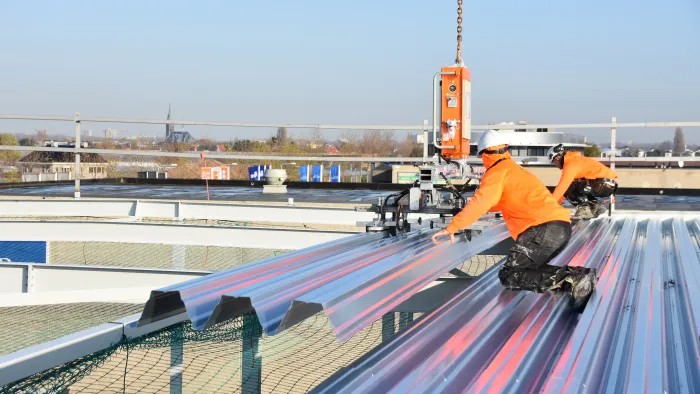
The steel roof sheets are delivered in bundles, which are lifted onto the roof as a whole and then positioned using a vacuum lifter. This eliminates manual handling and allows installers to place longer profiles in a single operation, further increasing productivity. An important requirement is that warm-roof sheet bundles are delivered “positive” (with the profile peaks facing upward) to the construction site. SAB already ensures this during factory production and was involved in this development together with VIAVAC.
This application can be seen in practice on YouTube: New installation method for SAB roof sheets.
Why choose installing SAB roof sheets?
SAB offers the widest range of cold-roof and warm-roof profile sheets in corrugated and trapezoidal designs. A reliable choice with more than 50 years of experience. The roof sheets can also be further processed in-house, such as perforation and drainage holes. The application of anti-condensation fleece and protective film is also possible. All SAB cold-roof profile sheets are always delivered “positive,” with the peaks/ribs facing upward. For warm-roof profile sheets, the available options are listed below.
Options for positive delivery of bundles from SAB profiles:
- All SAB warm-roof profile types (SAB 70R/800, 85R/1120, 89R/915, 100R/825, 106R+/750, 135R/930, 153R/840, 158R/750, and 200R/750)
- All warm-roof sheet thicknesses from 0.75 mm up to and including 1.50 mm
- All materials / coatings / processing options (SV, KID, SP, Perfo LS/LB, etc.)
- All bundles with lengths from 2.5 meters (often up to 24 meters)
- Lengths within a bundle may differ by a maximum of 0.5 m for safety reasons on site (see the explanation of safety risks)
- All bundles up to the known maximum bundle weight
- Available for an additional fee per bundle
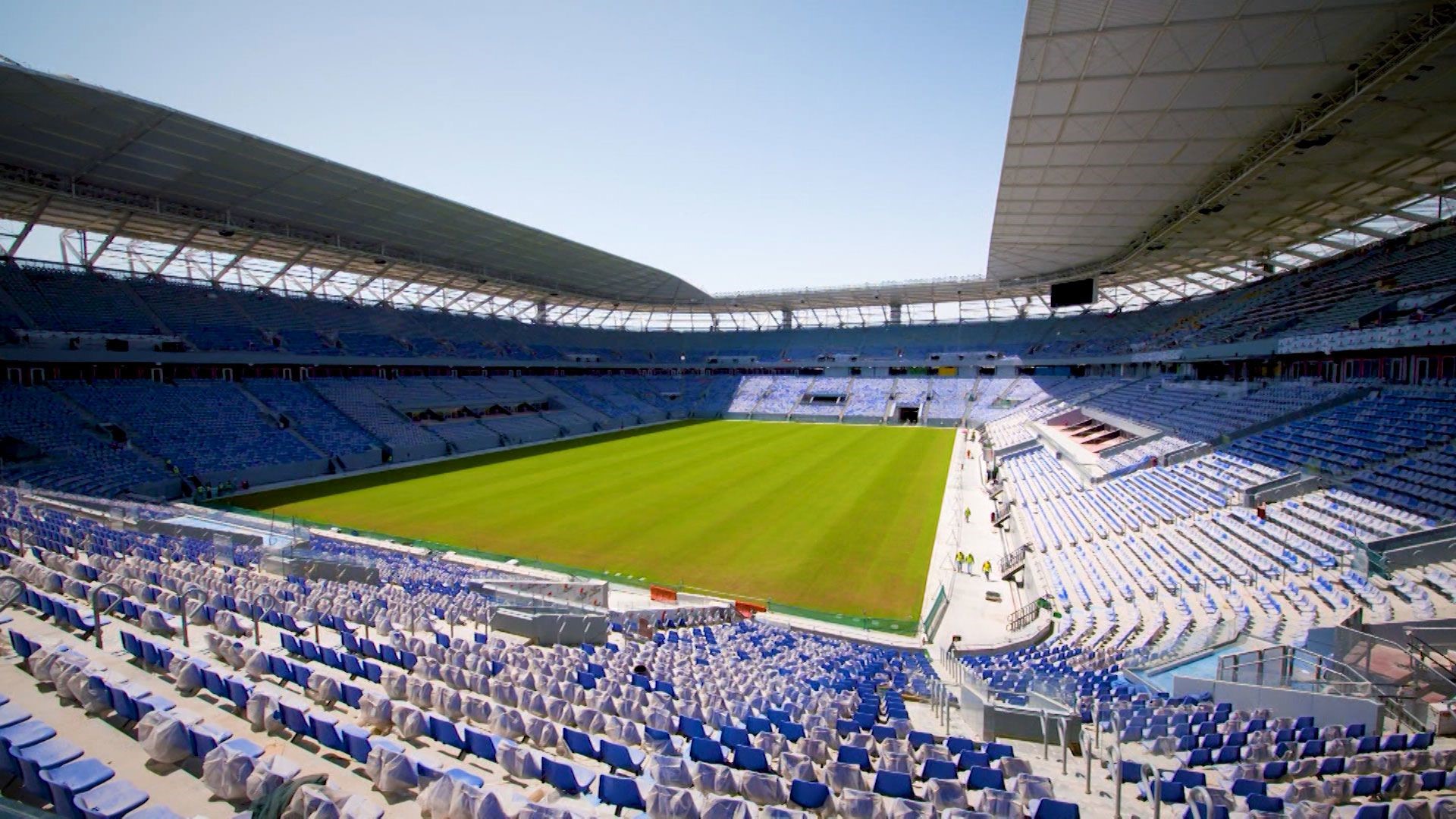
A striking roof sheet project is Stadium 974 in Doha, built for the 2022 Football World Cup: SAB roof sheets for the Football World Cup in Qatar, Stadium 974, Doha.

History
The Dutch industry association Dumebo DWS has drawn up a guideline for an “ergonomically friendly” working method, which forms part of the Quality Guideline for Metal Facades and Roofs. Metal roof sheets weighing more than 50 kg may no longer be installed manually in The Netherlands and must be handled mechanically. In practice, this means using a crane and suitable lifting equipment for sheets—such as a vacuum lifter—to install the steel roof sheets.
This “ergonomically friendly working method” is based on research conducted by TNO in 2010/2011. In cooperation with the ARBO committee of Dumebo DWS and SAB, TNO carried out practical research into the physical load involved in handling (warm) roof sheets. The study measured average peak loads of approximately 78 kg during manual lifting and installation of metal roof sheets. This far exceeds the permitted limit of 25 kg for one person (and also 50 kg for two persons).
SAB: the first
SAB-profiel was the only roof sheet manufacturer to participate in the TNO research of Dumebo DWS. In addition, SAB developed a solution together with VIAVAC for mechanically lifting and installing roof sheets. SAB was the first roof sheet manufacturer to deliver bundles inverted to the construction site, allowing the roof sheets to be easily lifted and installed using a VIAVAC vacuum lifter. This solution has been extensively tested in practice and functions to the satisfaction of installation companies. As a result, it was one of the entries for the FNV Arbo Award 2012; see the Dutch film SAB–VIAVAC nomination FNV Arbo Award 2012.
Frequently asked questions about installing roof sheets
What are the advantages of installing roof sheets?
Roof sheets (such as steel roof sheets or sandwich roof panels) are widely used because of several advantages:
- Fast installation
Roof sheets are large and lightweight, making them much quicker to install than traditional roofing materials such as tiles. - Low costs
Both material and labor costs are often lower because less time and fewer fasteners are required. - Long service life and strong protection
Metal roof sheets and sandwich panels are highly resistant to:- wind
- rain
- snow
- UV radiation
- Lightweight
Suitable for renovations or roofs with limited load-bearing capacity. - Insulation options
With sandwich panels, the insulation is already integrated between two steel sheets, saving time and insulation costs. - Low maintenance
Minimal maintenance required—usually periodic inspection is sufficient.
How long do roof sheets last?
The service life varies by type of roof sheet:
| Type of roof sheet | Average service life |
| Coated steel roof sheets | 30–50 years |
| Sandwich panels | 30–40 years |
Factors influencing service life:
- quality of the coating
- maintenance
- location (coastal areas have a higher risk of corrosion)
- correct installation
Are roof sheets suitable for every type of roof?
Generally yes, with a few points of attention.
Suitable for:
- Pitched roofs
- Large roof surfaces such as sheds, warehouses, and industrial halls
- New construction and renovations
How do I maintain roof sheets?
All information about roof sheet maintenance can be found on the SAB website under maintenance: How to maintain SAB profiles and panels.
What are the advantages of SAB-Profile delivering bundles “positive” to the construction site?
- No damage to roof sheets (high risk when turning bundles on site yourself)
- No loss of crane time or installation time (which does occur when turning bundles on site)
- No safety risks on site (which do occur when turning bundles on site)
- Weather-independent
- Proven in practice with various types and lengths of SAB roof sheets
- No physical strain on installation workers when combined with mechanical installation
- Retention of installation staff, enabling them to work longer
- Possibility to work with only two installers when combined with mechanical installation
- In combination with mechanical installation, no risk of damage or scratches to the coating or zinc layer (which can occur when dragging sheets)
- Possibility to switch to longer roof sheets (three or more spans instead of two-span lengths)
Who can I contact for more information about vacuum lifters?
There are several suppliers on the market, but VIAVAC in Lopik is the market leader in the Netherlands and active in many European countries. For more information about renting or purchasing a VIAVAC vacuum lifter, please visit the VIAVAC website www.viavac.com.